
Written by Asia Kaiser
Project Team
- Asia Kaiser, Project Director and USDA Fellow Ph.D. Candidate in Ecology and Evolutionary Biology at the University of Colorado Boulder
- Julian Resasco, Project Mentor Assistant Professor (on sabbatical) Department of Ecology and Evolutionary Biology at the University of Colorado Boulder
Research Assistants from the Department of Ecology and Evolutionary Biology at the University of Colorado Boulder
- Noah Mayer, Undergraduate Honors Thesis Student
- René Aronson, Undergraduate Honors Thesis Student
- Rhiannon Danborn, Undergraduate Student
This past summer, our research team partnered with Denver Urban Gardens (DUG) to study how insects support food production in community gardens across the city. Community gardens play an essential role in providing fresh produce, especially in neighborhoods with limited access to fruits and vegetables. But it is still not fully understood how the surrounding neighborhood characteristics influence the insects that help gardens thrive. Do more urban areas have less bee diversity and therefore reduced pollination services? Does neighborhood income level impact the diversity of insect communities?
For our project, we focused on two questions:
- Do different gardens receive different levels of pollination and natural pest control based on their insect communities?
- How do neighborhood characteristics (such as land use and socioeconomic factors) shape these insect communities?
Understanding these patterns can help identify which gardens may be at higher risk of reduced crop yield or insufficient ecosystem services.
Over the summer, we surveyed insect biodiversity at 21 DUG sites across Denver, and we used several tools to monitor insect populations:
- Vane traps to collect flying insects like bees and butterflies
- Pitfall traps for ground-dwelling insects such as beetles and ants
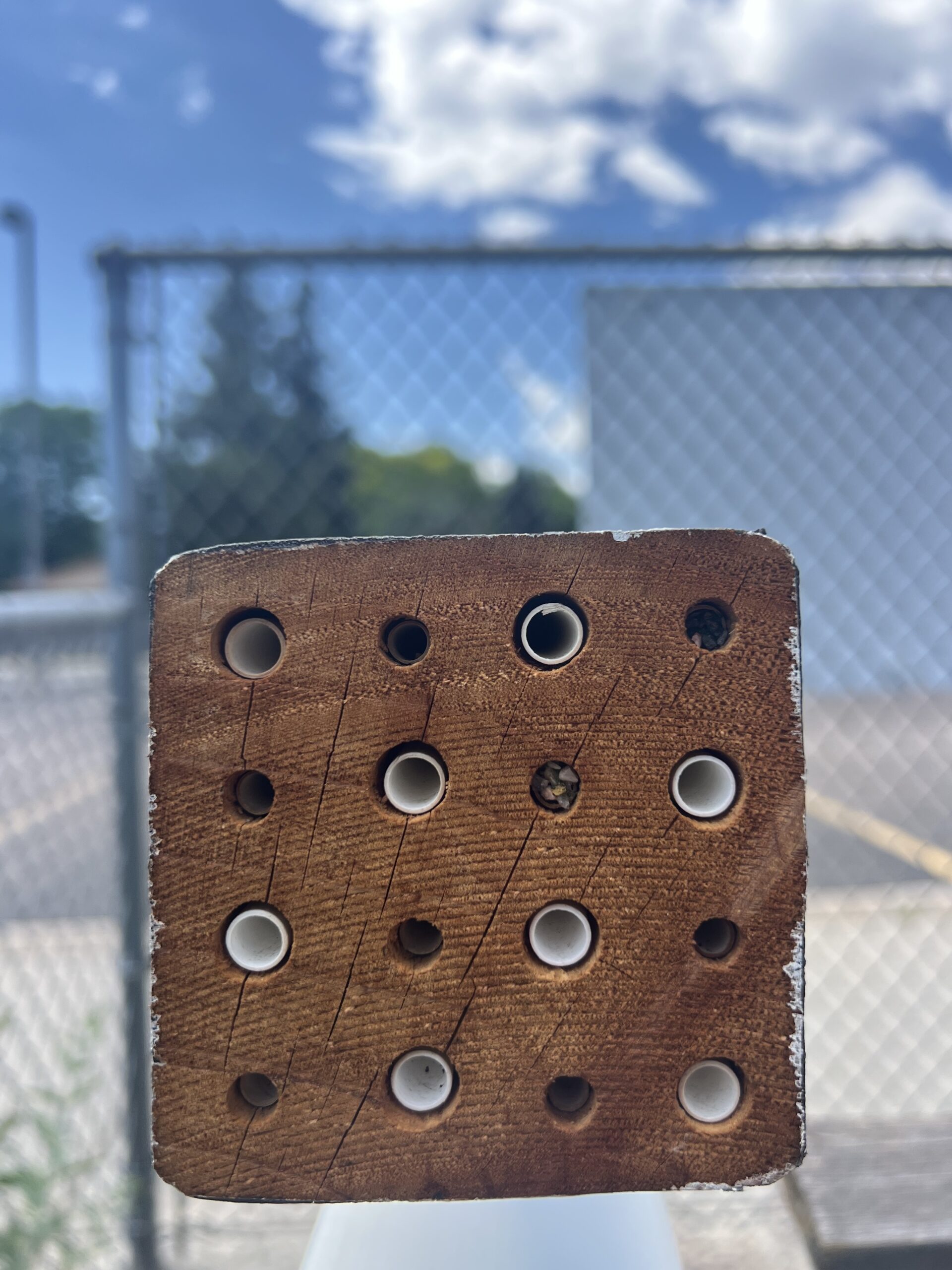
- Bee hotels to monitor solitary bee species without harming them
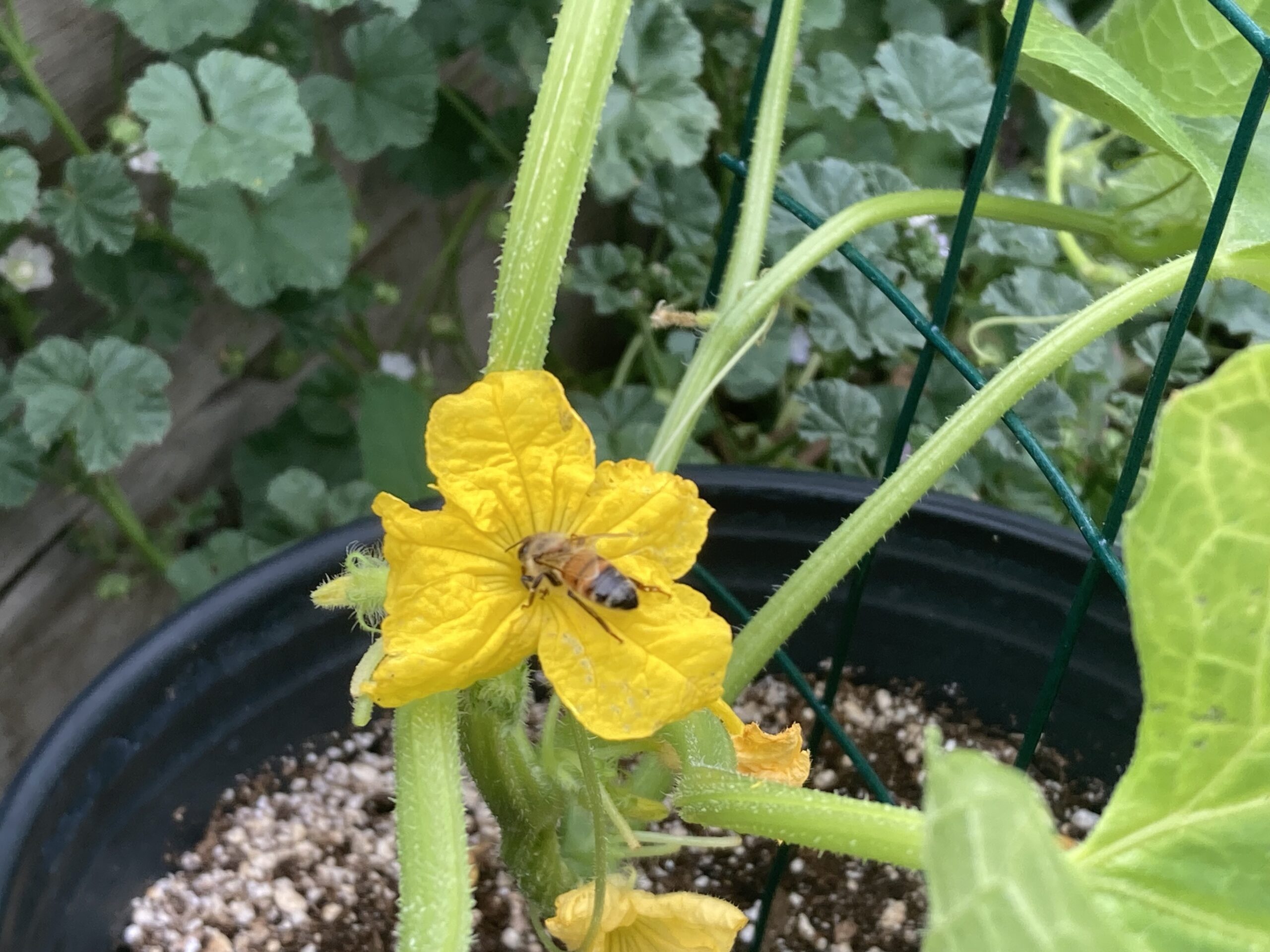
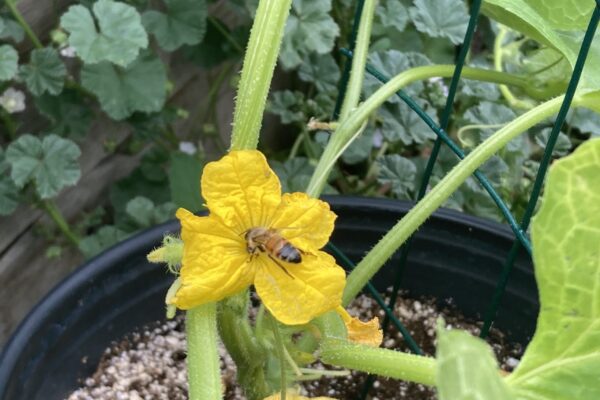
In addition, we set out six cucumber plants at each site to measure pollination services, herbivory, and natural enemy pest control services. We selected cucumbers since they require pollination to produce fruit. To establish a basis for comparison of pollinator activity and efficiency, we manually pollinated the flowers of half the plants and left the remaining plants to be pollinated by the site’s insects. Fruit size, quantity, and quality will serve as a gauge of pollination services.
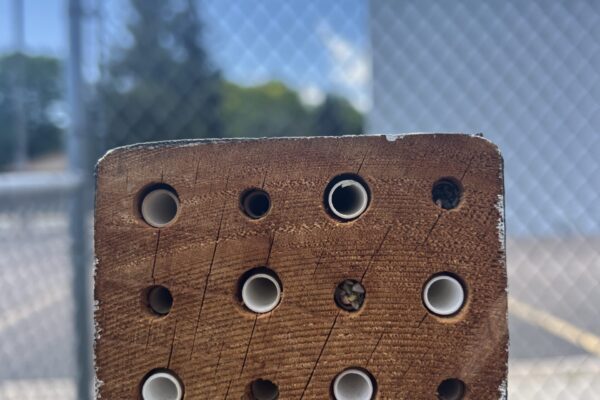
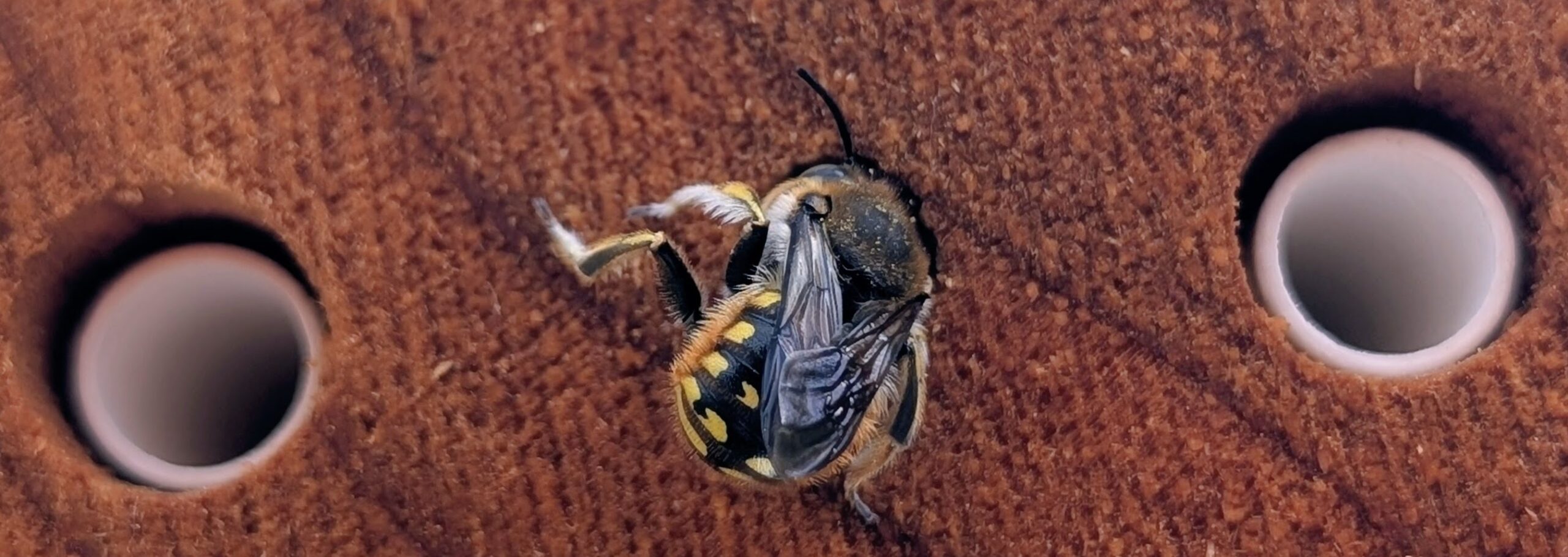
A bee box with two cavities filled with bees and capped off with pebbles.
A honeybee pollinating a cucumber flower!
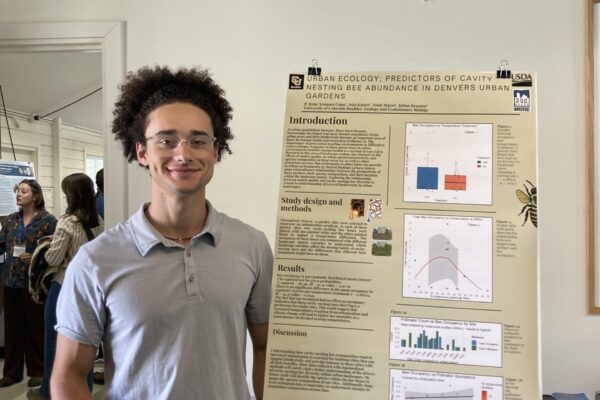
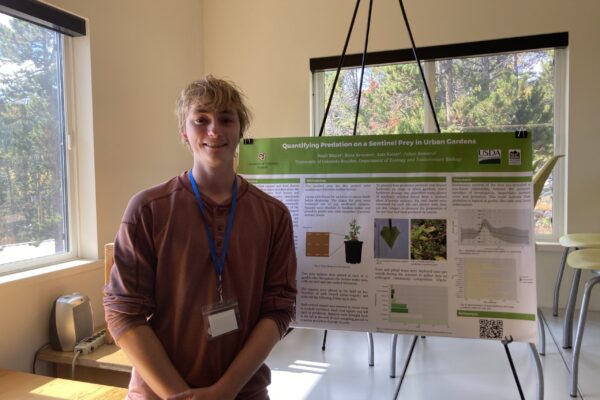
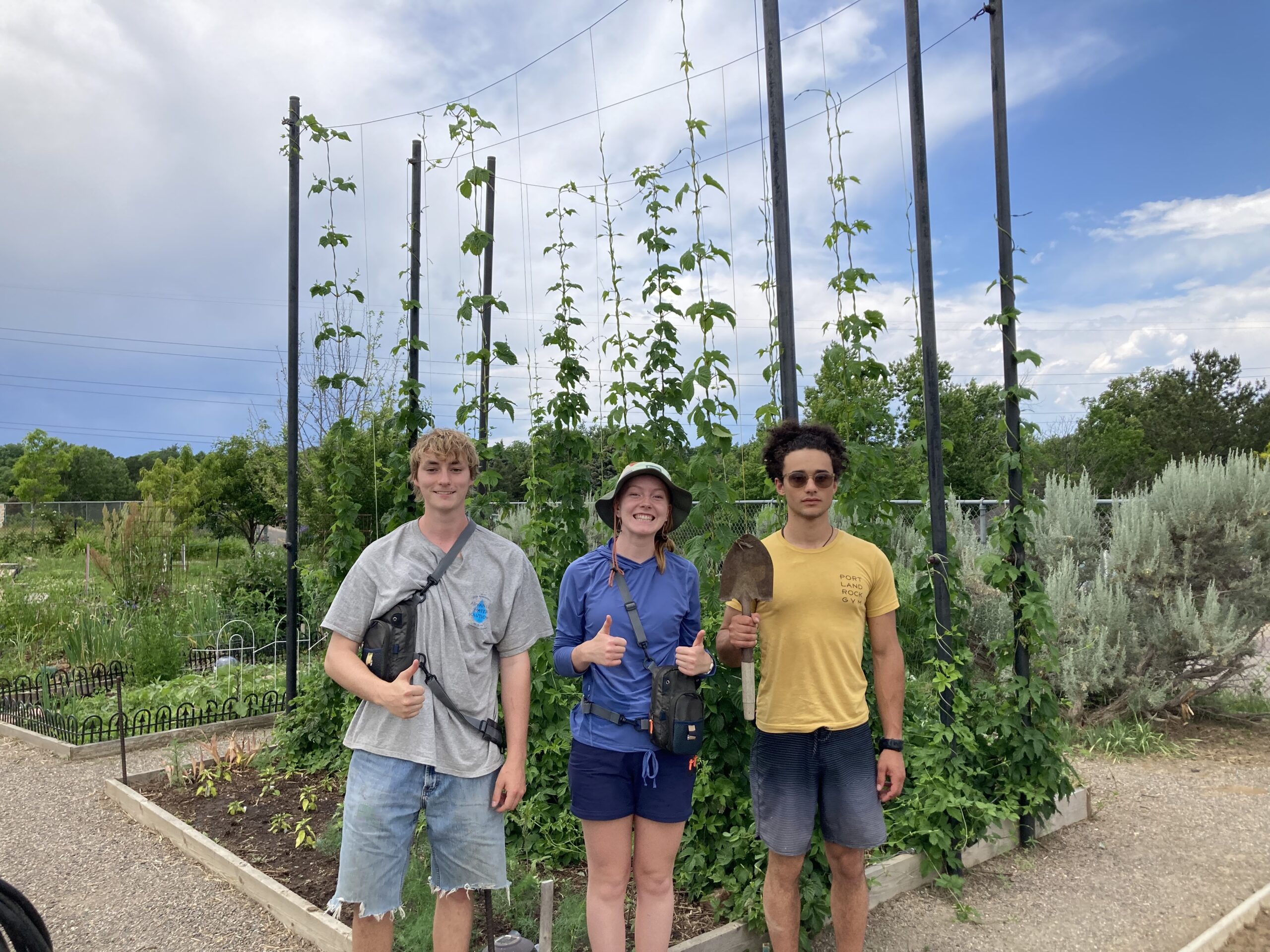
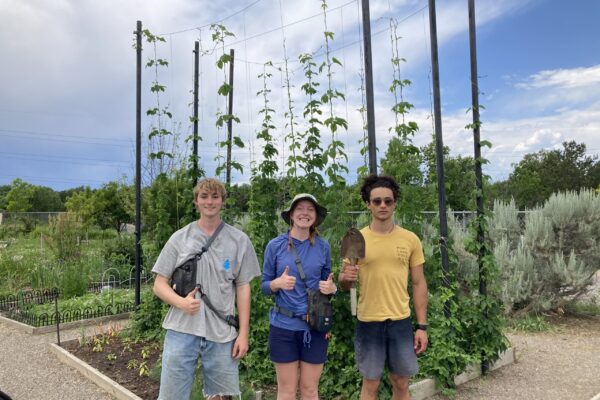
Undergraduate research assistants who worked on the project over the summer. Pictured from left to right are Noah Mayer, Rhiannon Danborn, and Rene Aronson from the Department of Ecology and Evolutionary Biology at the University of Colorado Boulder.

Preliminary Results and Next Steps
By understanding how insect communities vary across gardens, we can better support urban agriculture and food access in Denver. We are currently processing the field-collected data, identifying all insects, and analyzing the data. Here are some preliminary results for June, showing the most commonly collected insects and arthropods across the sites.
The data collected this summer will be shared through:
- A public-friendly report on common garden insects
- A short video highlighting the research and key findings
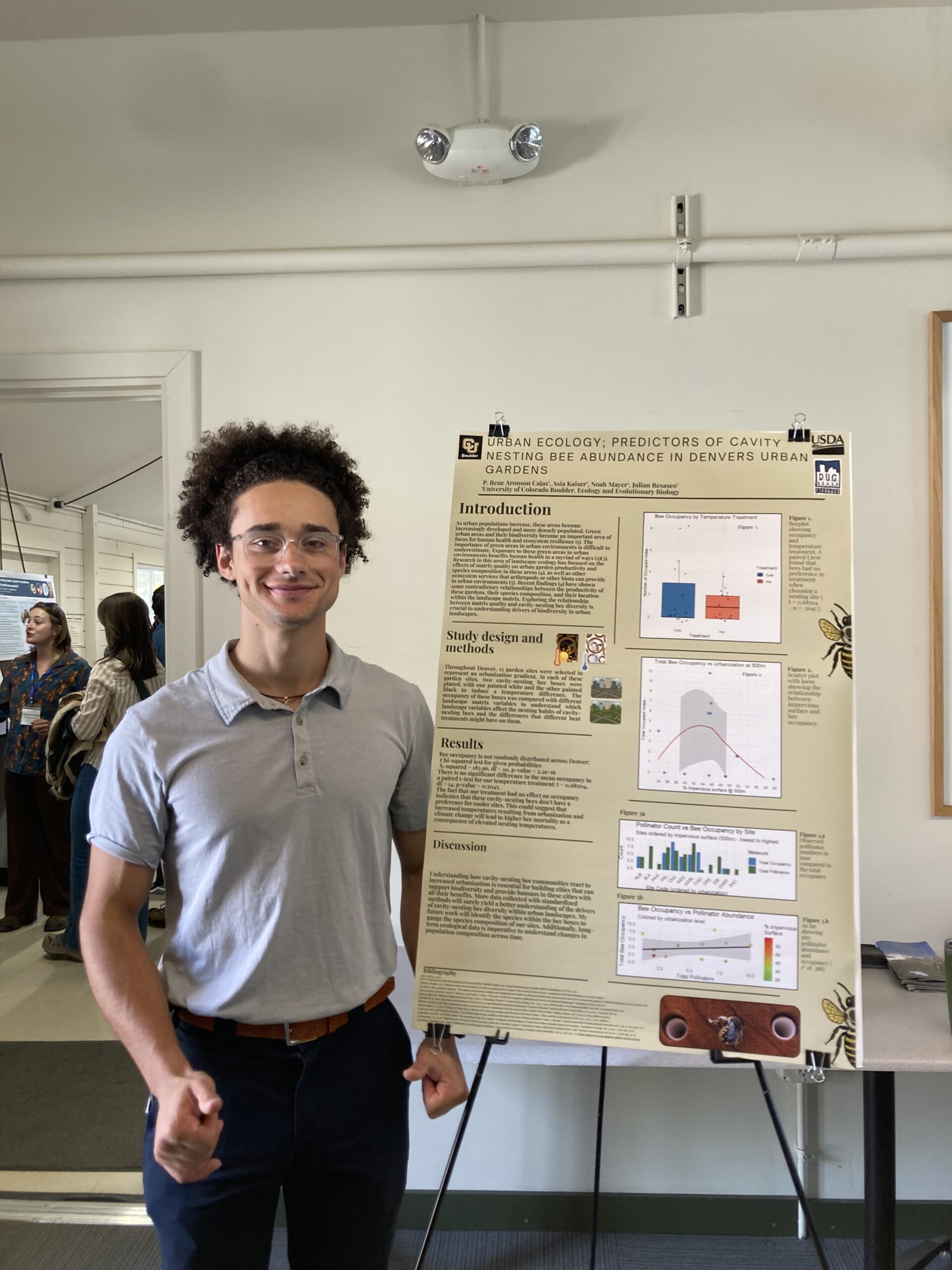
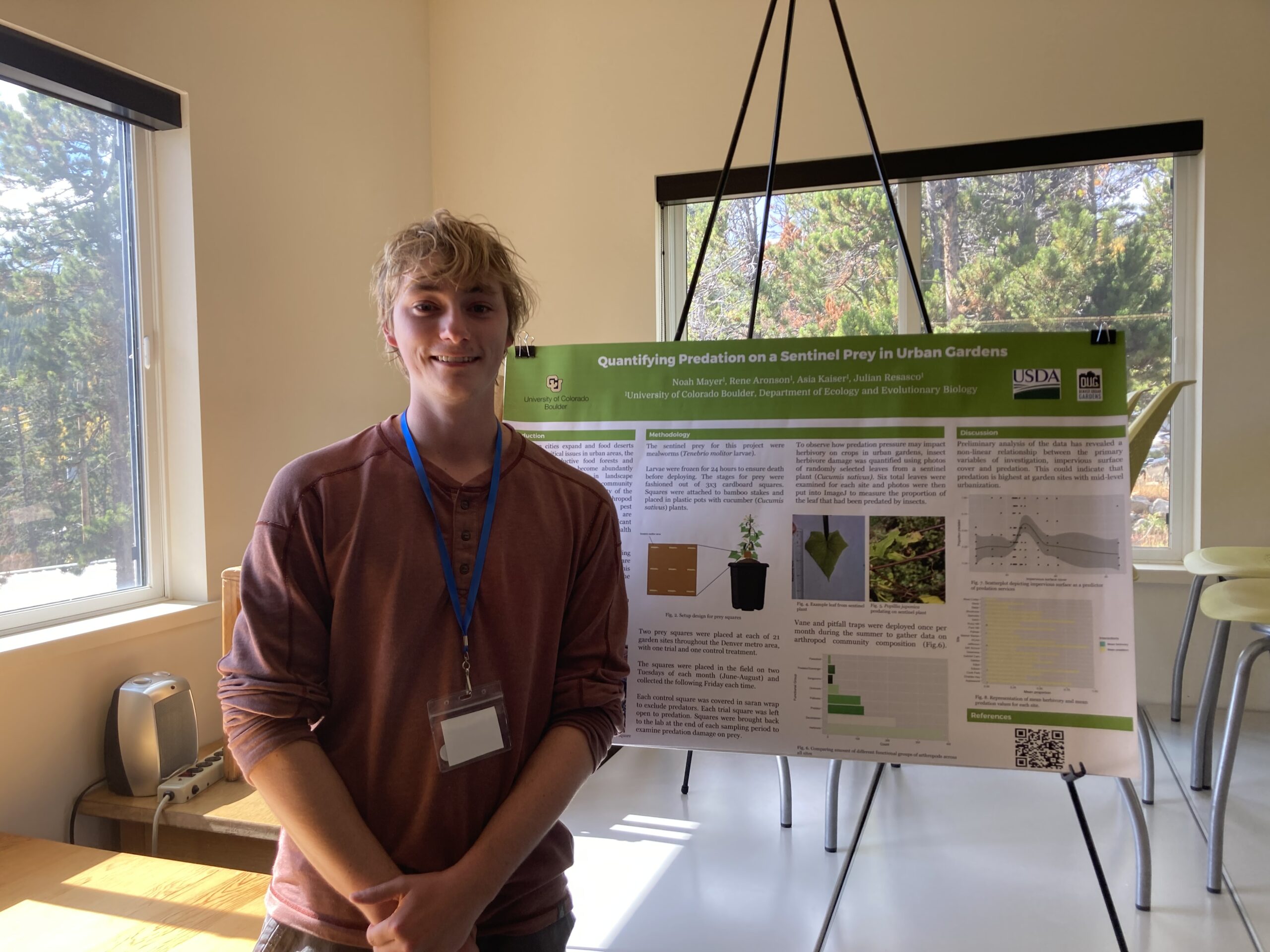
- Presentations at a national conference and a peer-reviewed publication
All preserved insect specimens will be donated to the CU Natural History Museum for future research and education.