

DUG operates community gardens across six counties in the Denver metro. Drought conditions are affecting the entire region this season. This resource outlines current restrictions by county and practical water-saving guidance for all gardeners and community members.
This FAQ will be updated as conditions and restrictions change. Last updated: April 16, 2026.
1. What is the current drought situation across the metro area?
Colorado is a headwater state feeding 4 main rivers and 19 downstream states and Mexico.
Colorado is experiencing one of its driest years in modern record. The Colorado River Basin snowpack sits at 55% of normal, and the South Platte River Basin is at 42% of normal. Denver Water’s reservoirs are below the seasonal average, and the State of Colorado has activated its drought task force for the first time since 2020.
Roughly one-third of Colorado is currently experiencing “severe drought” (D2) or higher. Water utilities across the region are asking customers to reduce outdoor water use by 10–20%.
Denver County — Stage 1 Drought Restrictions (Mandatory, effective March 25, 2026)
Denver Water has declared Stage 1 drought. Key rules:
- Lawn watering: Maximum 2 days per week, on your assigned schedule
- Even-numbered addresses: Sunday & Thursday
- Odd-numbered addresses: Wednesday & Saturday
- Commercial/multifamily/HOA/government: Tuesday & Friday
- Watering hours: Before 10 a.m. or after 6 p.m. only
- Hand watering & drip irrigation: Allowed as needed for trees, shrubs, vegetables, and flowers — but not between 10 a.m. and 6 p.m.
- Goal: 20% reduction in total water use
- Fines: First violation: warning; second: $250 fine; third: $500 fine. To report water waste, call Denver Water Customer Care at 303-893-2444.
Denver Water also serves customers in portions of Adams, Arapahoe, and Jefferson counties. If you receive your water bill from Denver Water, these rules apply to you regardless of which county you live in.
🔗 Denver Water Drought Information
Adams County — Stage 1 Active (Thornton); Delayed Season Start (South Adams County)
Thornton enacted Stage 1 restrictions effective March 15, 2026 — the first metro city to act. Thornton asks residents to delay turning on sprinkler systems until May, water vegetable gardens only as needed, and avoid installing new sod or grass seed during drought.
South Adams County Water (a Denver Water distributor) has approved a delayed start to the outdoor watering season, pushing it from April 13 to May 4.
🔗 City of Thornton Water Conservation 🔗 South Adams County Water & Sanitation
Arapahoe County — Stage 1 Pending (Aurora, effective ~April 7); Denver Water areas already active
Aurora is finalizing Stage 1 restrictions expected to take effect April 7. Aurora’s reservoirs are at approximately 68% capacity — about 1.5 years of usable supply. Proposed rules:
- Lawn watering: 2 days per week
- Even addresses: Thursday & Sunday
- Odd addresses: Wednesday & Saturday
- New lawn installations are not permitted
Officials have warned that Stage 2 restrictions (35% reduction) could follow later in the season if Stage 1 goals aren’t met.
Portions of Arapahoe County (Littleton, Centennial, Greenwood Village) are served directly by Denver Water and are already under Stage 1.
Jefferson County — Stage 1 (Denver Water areas & Consolidated Mutual Water)
Much of Jefferson County is served by Denver Water, so Stage 1 rules above apply to Lakewood, Wheat Ridge, and surrounding communities.
Consolidated Mutual Water, serving approximately 85,000 people in parts of Lakewood, Wheat Ridge, and unincorporated Jefferson County, has also implemented restrictions seeking a 20% reduction:
- Outdoor watering: 2 days per week, maximum 2 hours per session
- Even-numbered addresses: Tuesday & Saturday
- Odd-numbered addresses: Wednesday & Sunday
🔗 Consolidated Mutual Water 🔗 Jefferson County Water Resources
Douglas County — Drought Watch (Highlands Ranch); Voluntary Conservation (Castle Rock, Parker)
Douglas County has not yet reached mandatory Stage 1 restrictions, but action is underway.
Highlands Ranch Water declared a drought watch on March 1. Once irrigation season begins in April, outdoor watering will be limited to 3 days per week.
Castle Rock Water is considering entering its first formal drought stage and is requesting voluntary 10% reductions from customers.
Parker Water and other Douglas County utilities recommend delaying sprinkler system activation until mid-May and checking for leaks before the season begins.
🔗 Highlands Ranch Community Association Water 🔗 Castle Rock Water
Boulder County — No Restrictions Yet; Decision Expected May 1, 2026
The City of Boulder conducts its annual water supply evaluation on May 1, weighing snowpack, reservoir levels, and Colorado-Big Thompson Project allocations. Boulder’s local reservoirs are currently in relatively better shape than other metro areas. Staff have indicated Boulder is unlikely to trigger formal drought stages based on the city’s current formula, though conservation messaging is being prepared.
Important note: Boulder County communities vary. The Town of Erie has issued a Water Supply Shortage Emergency (Level 4) — all residential sprinklers are off through the end of March, and parks have ceased irrigation entirely.
🔗 City of Boulder Water Conservation 🔗 Town of Erie Utilities
2. How does this affect water availability in DUG gardens?
While we have been seeing record temperatures, it is still possible that we will get April freezes, and we will be following our normal water turn-on schedule.
If DUG controls the water at your garden (approximately 30 gardens in our network), we will be in touch with Garden Leaders directly about water turn-on timing. At all other sites, water access is managed by the landowner partner and is usually turned on during the first week of May.
We anticipate water to be on by the end of the second week of May at all sites. If it is not on by then, contact DUG directly.
3. Can I still water my community garden plot during drought restrictions?
Yes. In all counties with active restrictions, vegetable gardens and food-producing plants are treated differently from lawns and are not subject to the same level of restriction. Hand watering and drip irrigation are permitted as needed in most jurisdictions — the key rules are to water outside of 10 a.m. to 6 p.m. and to avoid evaporative loss through overhead watering.
4. What are the most effective ways to conserve water outside of the restrictions?
Water only when needed: Always check the soil prior to watering to assess if watering is really needed. Insert a stick several inches into the soil, remove it & if moistened soil adheres to it, no water is needed that day.
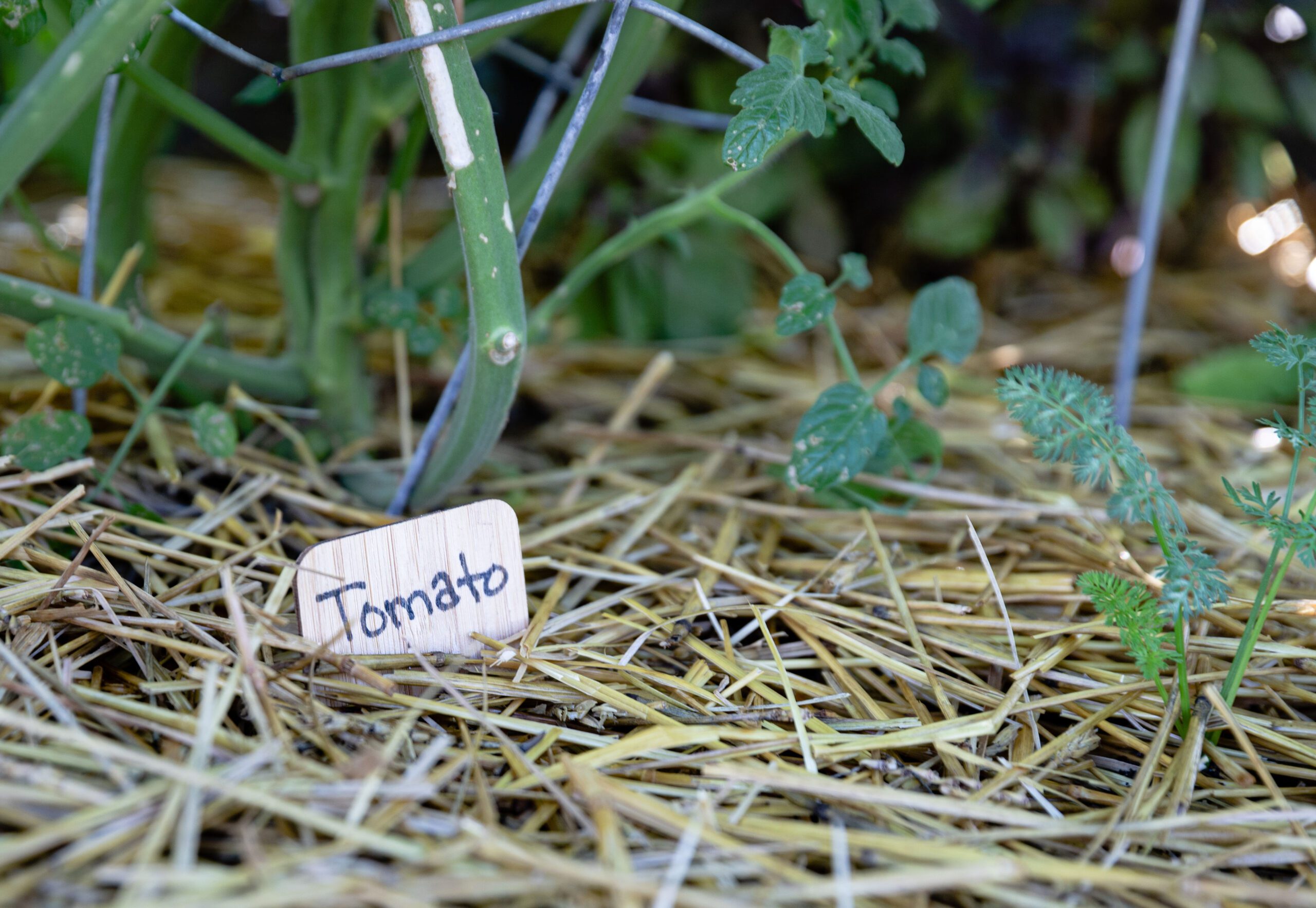
Mulch generously: A 2–3 inch layer of organic mulch (straw, leaves, and non-treated grass clippings work well) around plants retains soil moisture, reduces evaporation, and can cut watering frequency in half.
Water at the root zone: Drip irrigation or soaker hoses deliver water directly to roots and dramatically reduce waste compared to overhead watering. If your garden has a drip system, prioritize it over hand-watering. If you do not have access to drip irrigation, handwater directly at the base, with the nozzle at ground level. Avoid overhead watering of leaves (which also supports disease resistance!)
Hand-water deeply and less often: Light, frequent watering encourages shallow roots. Watering deeply 2–3 times per week (where permitted) builds drought-resilient plants with deeper root systems.
Weed regularly: Weeds compete directly with your plants for water. Keeping beds weed-free is one of the simplest water conservation steps.
You can read more about Effective Water Conservation Techniques here.
5. What happens if restrictions escalate to Stage 2?
Stage 2 restrictions typically require a 35% reduction in water use and may limit outdoor watering to one day per week for turf. For community gardens, food production is generally prioritized, but hand-watering and drip-only rules become stricter.
DUG will communicate any changes to garden watering policies directly to plot holders as conditions evolve. Monitor this page and your email for updates.
Where can I get more information?
- Denver Water Drought Updates: https://www.denverwater.org/tap/denver-water-snowpack-and-water-supply-update
- Colorado Drought Monitor: drought.unl.edu/CurrentMap/StateDroughtMonitor.aspx?CO
- Denver Urban Gardens: dug.org
- Colorado Water Conservation Board: cwcb.colorado.gov
