

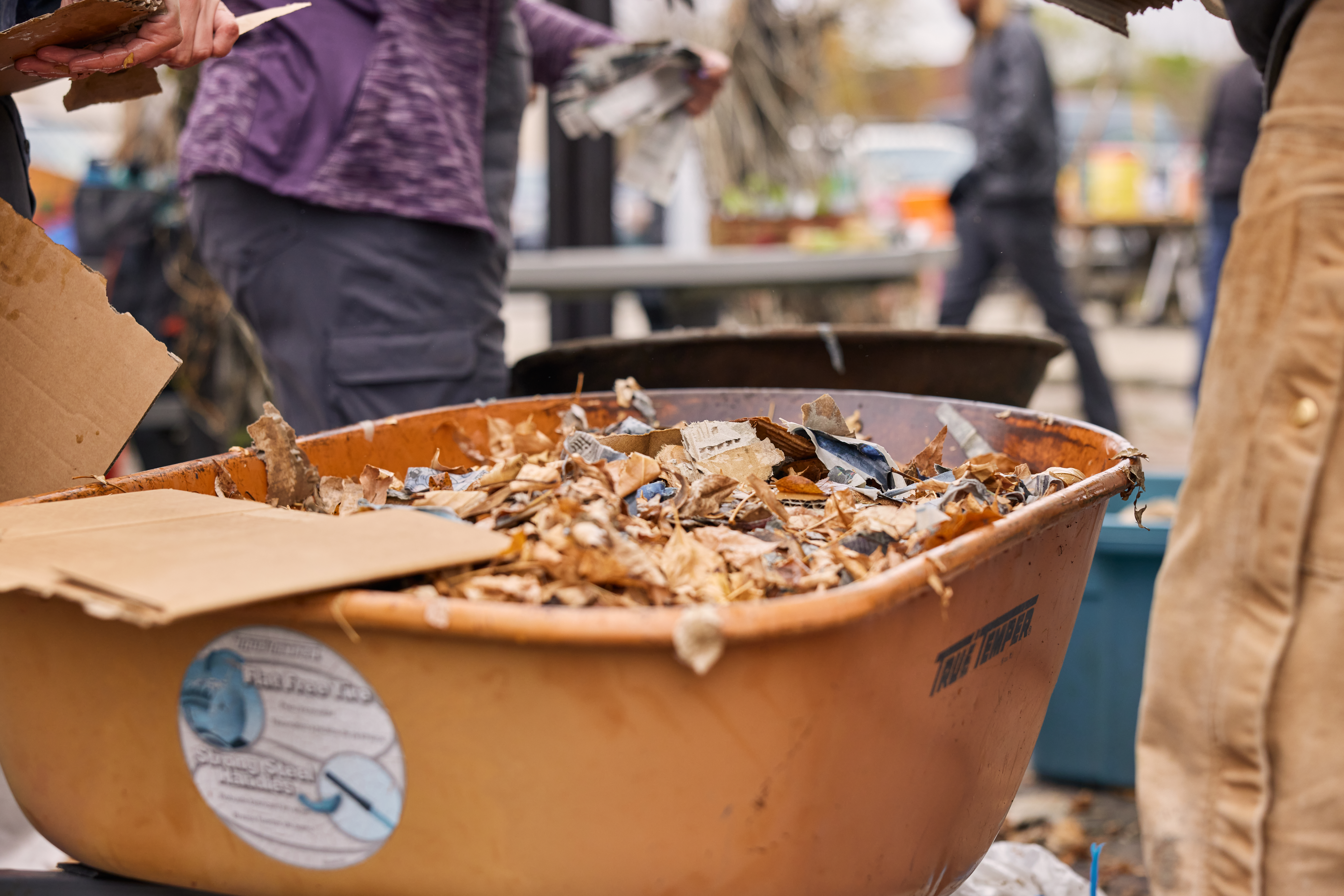
Imagine cutting your gardening costs while also reducing your household waste at the same time. The truth is, your kitchen and yard are already producing much of what your garden needs. At DUG, we value accessibility in growing fresh and healthy food, and being creative is essential! You likely already have a powerful source of nutrients in your home that you can use to reduce waste and promote healthy garden soils.
Before diving in, it helps to understand what plants actually need. The three major nutrients plants rely on are nitrogen (N), phosphorus (P), and potassium (K), often referred to as NPK. Nitrogen fuels leafy, green growth. Phosphorus supports strong roots and flower development. Potassium helps plants fruit, manage stress, and build disease resistance. Every tip below feeds your soil in one or more of these ways, and we’ll tell you which one so you can match your inputs to your plants’ actual needs.
A note on soil health: building rich, fertile soil is a slow process that rewards consistency over intensity. Start with one or two of these methods, get comfortable, and add more over time. Small, regular additions of balanced organic material will do far more good than a one-time big effort.
Nutrient Boosters
These are targeted amendments that add specific nutrients your plants are hungry for.
Coffee Grounds
You may have seen coffee shops advertising “free coffee grounds for gardening” around town. That’s because they are a great way to add nitrogen to your soil and help improve soil structure and drainage over time. We recommend using it in small amounts, either by digging lightly into your soil or by incorporating it into your compost.
A common concern is that coffee grounds will over-acidify your soil — but spent grounds are actually nearly pH-neutral, so this is largely a myth. In fact, for Colorado gardeners dealing with alkaline soils, a slightly acidic amendment like coffee grounds can be a welcome addition.
Banana Peels
Bananas are rich in potassium, which benefits plants by supporting flowering, fruiting and handling stress.This makes banana peels especially useful during Colorado’s hot, dry summers, when plants need extra support managing heat and drought. We recommend chopping the banana peels and burying them near your plants, or soaking them in water for a “banana tea” to use for watering.
Eggshells
Eggshells are a great way to slowly add calcium to your soil and support strong cell walls for plants like tomatoes and peppers, which are susceptible to calcium-deficiency issues like blossom end rot. Plus, they can help deter pests! Simply rinse your shells, crush them up, and then work them into your soil.
For faster results, grind them into a fine powder or steep crushed shells in water overnight to make an “eggshell tea” — this makes the calcium available to plants much more quickly than whole or coarsely crushed shells.
Wood Ash
If you have a fire pit or fireplace, don’t toss those ashes. Wood ash is a surprisingly effective source of potassium and calcium, and it raises soil pH, making it a useful amendment for acidic soils. Use it sparingly (a light dusting worked into the soil is plenty), and avoid using it around acid-loving plants like blueberries. Because Colorado soils tend to be alkaline already, a little goes a long way here.
Soil Builders
These materials improve the structure, biology, and long-term fertility of your soil, not just its nutrient content.
Kitchen Scraps
You can use vegetable peels, fruit scraps, or coffee grounds to add organic matter and nutrients to your plants over time. We recommend burying appropriate scraps directly into your garden bed soil, rotating spots each time to distribute nutrients evenly
Not all kitchen scraps are created equal, though. Here’s a quick guide:
- Yes: vegetable peels, fruit scraps, grains, eggshells, coffee grounds
- In moderation: citrus peels (in large quantities, they can slow decomposition) and onion or garlic scraps
- No: meat, fish, fat, cheese, or bones — these attract pests and break down anaerobically, creating odor and harmful conditions in your soil. These belong in your green compost collection cart, not your garden bed.
Leaves
Fallen leaves are one of the most underused free resources in any yard. As they break down, they improve soil structure, feed beneficial microorganisms, and add carbon — the “brown” that balances nitrogen-rich “green” amendments.
Chop or stomp on them before layering them into your bed or compost to speed decomposition. One thing worth knowing: not all leaves are the same. Maple, elm, and most deciduous leaves are neutral and break down relatively quickly. Oak leaves, on the other hand, decompose slowly and can temporarily lower soil pH. If you have a lot of oak trees nearby, mix those leaves with others rather than using them alone.
Grass Clippings
While you can add your grass clippings to your green compost collection cart or home compost pile, you can also use them as mulch on top of your soil to provide a readily available nitrogen source. Make sure you let them dry in thin layers so they don’t mat before spreading them around plants. Matted wet clippings can get slimy, create odor, and actually repel water rather than retain it.
Grass clippings are a source of nitrogen, a major nutrient needed for plant growth, and also help soils retain moisture, especially important during this exceptionally dry Colorado season.
Note: Be sure to avoid chemically treated lawns and clippings, as this can negatively harm your plants!
Liquid Feeds
These water-based methods deliver nutrients quickly and are easy to work into your regular watering routine.
Freshwater Aquarium or Cooking Water
If you have a freshwater aquarium at home, the water you drain during cleanings is liquid gold for your garden. It’s rich in nitrogen and phosphorus from fish waste, and it contains beneficial microorganisms that support healthy soil biology — essentially a mild, natural liquid fertilizer.
Unsalted pasta/vegetable water can also provide your plants with beneficial nutrients. It picks up trace minerals and starches as it cooks, and once cooled to room temperature, it makes a gentle, nourishing addition to your watering can.
Compost Tea
If you have a compost pile going, you can brew a simple compost tea by soaking a scoop of finished compost in a bucket of water for 24–48 hours, then straining and using the liquid to water your plants. This delivers a broad spectrum of nutrients and beneficial microorganisms directly to your soil in a form plants can absorb quickly. It’s one of the most effective liquid feeds you can make at home — and it costs nothing.
Herb or Nettle Tea
Steeping nitrogen-rich plant material, especially nettles, comfrey, or yarrow, in water for a few days creates a nutrient-dense liquid feed popular in organic gardening. Fill a bucket about one-third full with plant material, cover with water, and let it steep for three to five days. Strain and dilute before using (it will be potent and strong-smelling). This method is particularly effective mid-season when plants are actively growing and hungry.
Putting It All Together
Using these methods well comes down to one core principle: balance. In composting and soil building, “greens” (nitrogen-rich materials like coffee grounds, grass clippings, and kitchen scraps) need to be balanced with “browns” (carbon-rich materials like dried leaves, cardboard, and straw). Too much nitrogen without carbon can create an imbalance and actually stress your plants.
Think of your soil like a long-term relationship — it rewards patience, consistency, and a little variety. You don’t need to do everything at once. Pick one or two methods that fit naturally into your routine, get comfortable, and build from there. Over time, these small habits add up to genuinely rich, living soil that grows healthier food with less effort.
And if you’re ready to take the next step, consider starting a home compost pile — it’s the single most effective way to build fertility across an entire growing season and brings together many of the materials above into one powerful resource.
