
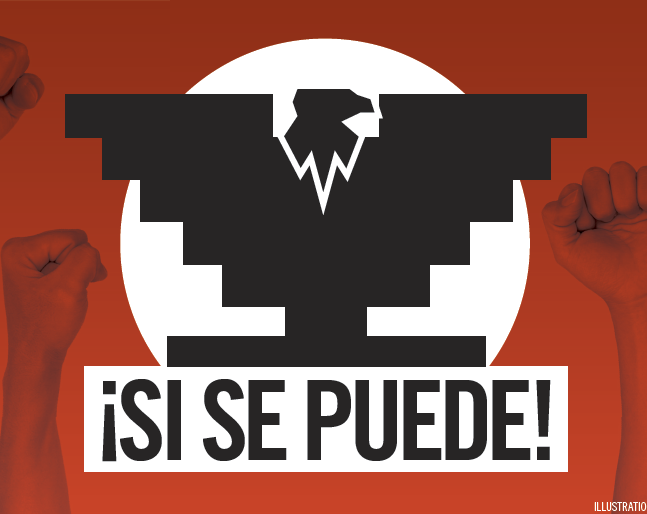
Today, we honor ‘Si, Se Puede’ — a rallying cry from farmworkers who were exhausted, underpaid, and organizing anyway. Like all movements, it was built by many people, and this month’s news reminds us that no single person is bigger than the values a movement stands for.
This work, and the work of the United Farm Workers, is a reminder that food has never just been about food. It’s about the ongoing struggle for fairness, access, and community power.
A Legacy Rooted in Struggle
The Farm Workers who created the labor movement did not begin in comfort. It was born out of injustice.
Farmworkers across the U.S., many of them Mexican and Filipino laborers, endured grueling conditions: long hours in extreme heat, poverty wages, unsafe housing, and widespread racism.
During the era of the Bracero Program, thousands of Mexican laborers were brought to the U.S. to work in agriculture under exploitative conditions. Workers reported being underpaid, overworked, and subjected to degrading treatment, including being sprayed with pesticides or chemicals—sometimes under the guise of “sanitation,” but often experienced as humiliation and control.
Community gatherings led to collective action and the formation of the National Farm Workers Association and United Farm Workers. These organizations and others are still working to provide farm workers with livable conditions, treatment, and wages
Through organizing, strikes, and boycotts, leaders like César Chávez and Dolores Huerta, and the United Farm Workers demanded something simple yet radical:
That the people who feed us deserve dignity, safety, and fair treatment. And we each have a role to play.
As Dolores Huerta, “Cada momento es una oportunidad para organizar, cada persona un activista potencial, cada minuto una oportunidad para cambiar el mundo”. [In Spanish, this translates to “Each moment is an opportunity to organize, each person a potential activist, each minute an opportunity to change the world.”]
The Fight Is Not Over
Those gains came at real cost, and the fight isn’t finished.
According to Farmworker Justice:
- Farmworkers still lack many basic labor protections, including overtime pay and full safety standards.
- Agriculture remains one of the most dangerous industries, with high risks of injury, illness, and heat exposure.
- Farmworkers are 35 times more likely to die from heat-related illness than other workers.
- Many face barriers to healthcare, fair wages, and safe working conditions.
Testimonies from recent farmworker-led tribunals describe ongoing realities of:
- Heat exhaustion and life-threatening working conditions
- Wage theft and employer retaliation
- Unsafe and overcrowded housing
- Sexual harassment and assault in the fields
At the same time, many farmworkers—especially those who are undocumented or on temporary visas—face fear of deportation or retaliation, making it difficult to speak out or seek help.
The system still needs transformation.
What This Means for Urban Gardens Today
At DUG, we are guided by the same belief as Farmworkers: that everyone connected to our food system deserves dignity, access, and a place to belong. Urban gardening, especially for immigrants, refugees, and marginalized residents, gives people access to land, fresh food, and opportunities to build community. Every garden plot offers a chance to reclaim agency over what we grow and how we share it. Every shared harvest strengthens neighborhoods, supports local food security, and fosters relationships across differences. These small, local acts echo the movement’s vision: food systems rooted in care, fairness, and human dignity.
In honor of this day’s legacy, the DUG office will be closed.
How You Can Support Farmworkers’ Day
- Learn about the history of farmworker movements through projects like the Bracero History Archive, which preserves firsthand stories of workers who lived through these conditions
- Support organizations like Project Protect Food System Workers (https://www.projectprotectfoodsystems.org/), Farmworker Justice, advocating for fair wages, safe conditions, and policy change
- Volunteer at or support your local community garden
- Grow and share food with neighbors as an act of care and connection
- Advocate for policies that protect farmworkers’ rights and dignity
- Contact your local representative to ask for farmworker protections and inspections of farms using migrant workers
Continuing the Work
United Farm Workers has shown us that justice requires persistence, patience, and care. At DUG, we strive to carry that spirit forward every day through inclusive growing spaces, culturally responsive practices, and a commitment to equity in food access.
Today, we honor not only what has been achieved, but what still must be done.
Sí, se puede.
Resources / Credit
https://billofrightsinstitute.org/essays/cesar-chavez-dolores-huerta-and-the-united-farm-workers/
https://chavezfoundation.org/history/
https://farmworkerjustice.org/en
