

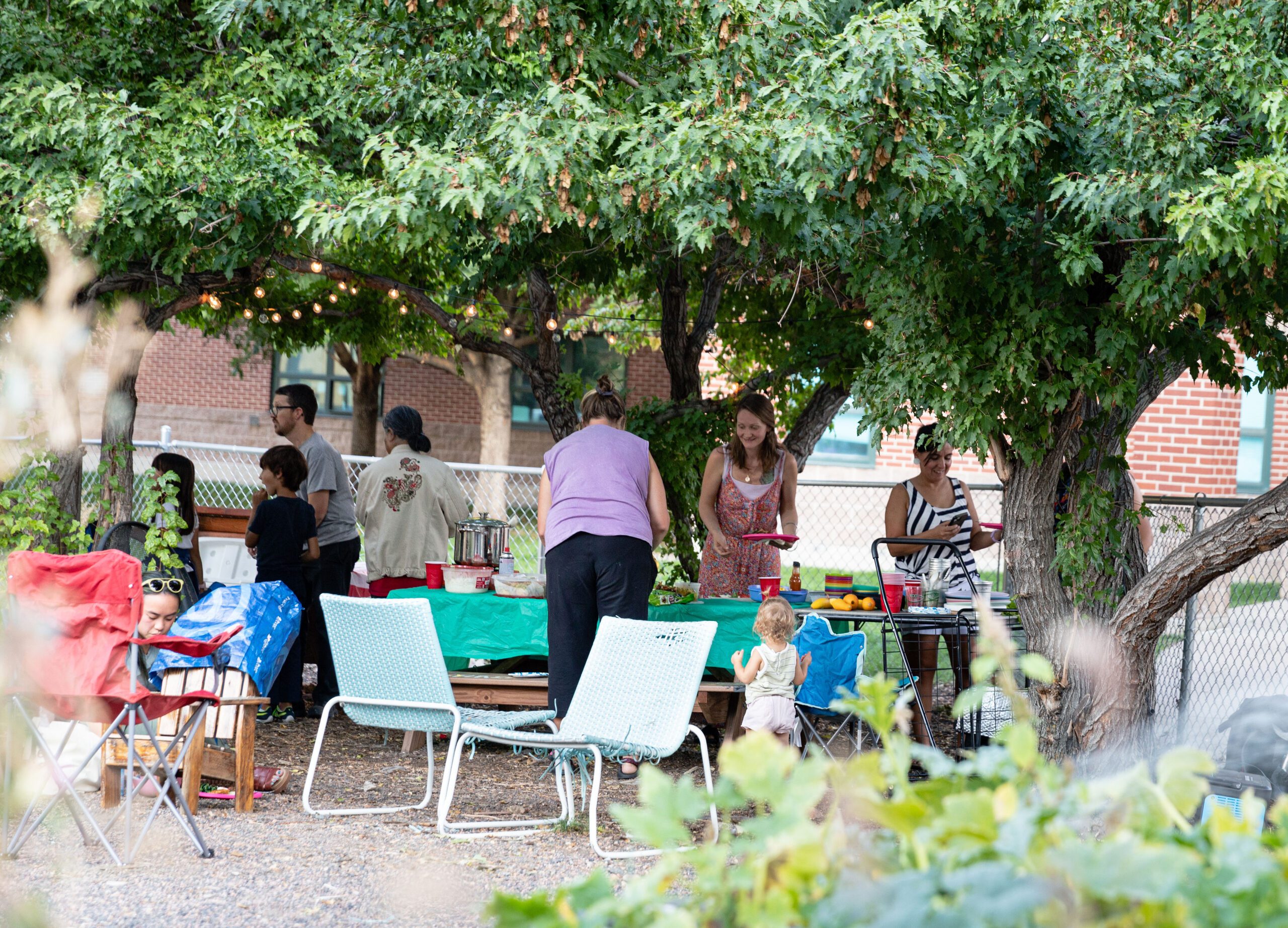
In a moment when social isolation and division feel all too common, a powerful idea is gaining traction—neighborism. Coined by Adam Serwer, a staff writer at The Atlantic, neighborism refers to “a commitment to protecting the people around you, no matter who they are or where they came from.” This concept emerged in Serwer’s reporting on grassroots resistance in Minnesota, where thousands of residents organized to support and safeguard their immigrant and vulnerable neighbors in the face of federal immigration enforcement.
At its heart, neighborism isn’t just a slogan; it’s a way of living that transforms neighbors into allies and communities into networks of mutual care and support.
Community gardens across cities like Denver are one of the most beautiful and practical expressions of neighborism. These shared spaces do more than grow food; they grow relationships, trust, and collective purpose.
Community Gardens: Growing More Than Food
Community gardens are places where people from diverse backgrounds come together to plant seeds, tend beds, and harvest produce. But they are also places where social bonds form organically: casual conversations over watering cans, shared workdays turning soil into produce, and new friendships sprouting alongside lettuce and tomatoes. In many neighborhoods, these gardens have become hubs of connection, resilience, and mutual aid.
Whether it’s swapping gardening tips, sharing surplus vegetables, or simply checking in on a neighbor’s plot, these everyday interactions are the building blocks of stronger, more caring communities.
The Spirit of Neighborism in Garden Spaces
Just as Serwer described neighborism as a philosophy rooted in protecting and standing with those around you, community gardens embody that same ethos. They invite people to:
-
Work together toward a common goal: cultivating healthy, accessible food for all.
-
Learn from one another, regardless of age or experience.
-
Share resources, from seeds and tools to knowledge and encouragement.
-
Build lasting relationships that extend beyond garden fences.
In a garden plot, neighborism becomes literal: you literally help nurture the land beside your neighbor’s plot, fostering a shared sense of purpose and interdependence.
From Soil to Solidarity
At a time when many communities are grappling with disconnection, community gardens offer a powerful reminder: people do care for one another, especially when given space and opportunity to do so. When neighbors plant seeds together, they also plant trust, cooperation, and belonging.
In Serwer’s own words, neighborism means showing care “no matter who they are or where they came from,” a principle as vital to social cohesion as it is to the well‑being of our neighborhoods. Community gardens give that principle a place to grow.
And like any garden, the results, whether friendships, shared meals, or resilient neighborhoods, blossom over time.
