

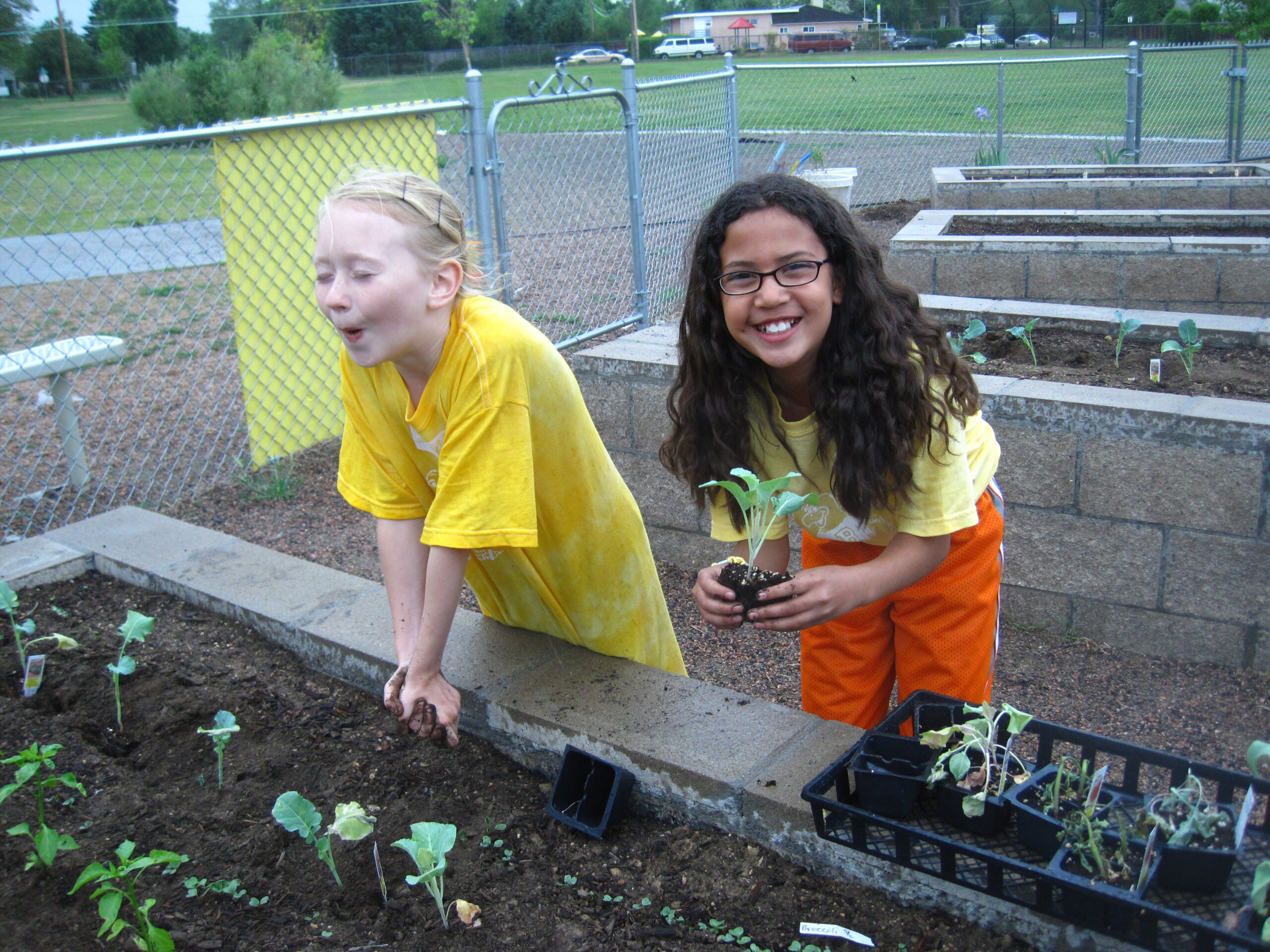
Garden club is a place for youth to explore the wonders of the garden. Through exploration, activities, and direct hands-in-the-soil, we can guide young people to gain a personal relationship with the garden and nature around them. Garden Clubs in DUG gardens can be for all ages and participants–families, seniors, individuals–they do not need to be focused on youth, but the purpose of this blog is to provide support with youth-focused garden clubs.
Garden Clubs are typically organized by a group of dedicated individuals who plan to support the same group of participants week to week, varying from 4-8 weeks or longer. Each Garden Club, like each garden, is different. For gardens interested in hosting a garden club, here are a few pieces of information DUG recommends you think through to ensure your Garden Club.
Establish consistent support:
Garden clubs need at least three consistent adults to support onsite: a primary instructor, a logistical coordinator, and a sub. Each adult volunteer will need to sign a liability waiver.
- A primary instructor will guide the lessons and establish shared agreements with the participants, with additional adults supporting and reinforcing agreements as needed.
- A logistical coordinator is particularly important to ensure all participants are accounted for at the beginning of the garden club and are checked out by an approved adult. Since this can be slotted in as an after-school program, participants may leave at differing times, ensuring the primary instructor is not taken away from the lesson each time a participant leaves. The logistical coordinator will be responsible for managing the participants in and out of the garden club.
- A Sub or three! Another set of hands is always welcome in the garden club. It is important to account for illness, travel, or anything else that may come up for the primary instructor or logistical coordinator during the span of the garden club season. Ideally, all adults supporting the Garden Club will be able to fill in for either of the previously mentioned positions, but it is necessary to have a person who feels comfortable directing the participants during the club.
Get an idea of the logistics
There are a few questions we need to ask before we start a garden club.
- How many sessions do we want to host?
*Food for thought* Most garden clubs range from 45-90 minutes
- How many participants do we want to host? What ages?
*Food for thought* Having a ratio of at most 1:10 – adults: young people – to ensure all participants feel equally supported, more adults are always welcome and make it easier to facilitate activities with participants, especially if the group is mixed-aged.
- Where will we get the participants for the garden club? From the school? From garden families?
*Food for thought* If you are attached to a school, getting into the school’s after-school club schedule will allow you to use the school outreach for recruitment. If the school is recruiting for your garden club, please ask them to provide some necessary information listed below in the participants’ needs.
- What funding do we have to support the garden club?
*Food for thought* You will need to purchase snacks (if not harvestable), materials for activities, children’s-sized hand tools and gloves, name tags, and soap.
Participants’ Needs
During the recruitment phase, whether the participants are directly from the school or from participants in the garden, it is important to collect the following information for every participant. Denying entry to the garden club is appropriate if you do not have the following information:
- An emergency contact name + phone number
- List of allergies and mediation*
*If medication is required to be administered during Garden Club, think of an epinephrine autoinjector for severe allergies
- Garden Club liability waiver
During the garden club, you may need access to a restroom and handwashing station. If attached to a school, see if you are able to access a restroom inside the building during the session. If unable, this may be something to let participants know prior to signing up that there will not be any restroom access during the session.
Garden Club Schedule
Each garden club will function a bit differently depending on the garden, your strengths, the time of year, and the number of sessions. DUG has created a basic outline for a 6-session Fall and Spring garden club below.
Spring Garden Club Sample Schedule
Week 1: Establish Garden Norms + Introduction to the Garden
Week 2: Group planting
Week 3: Mindfulness in the garden → Explore Spring
Week 4: All about pollinators
Week 5: All about compost
Week 6: Harvest and collective meal
Recommendations for Spring Plantings:
Planting beans, radishes, greens → check out DUG’s Culturally Inclusive Seeds to access varieties that may be more culturally appropriate for your Garden Club participants
Fall Garden Club Sample Schedule
Week 1: Establish Garden Norms + Introduction to the Garden
Week 2: Group planting
Week 3: Mindfulness in the garden → Explore Fall
Week 4: Weeding and putting the garden to bed
Week 5: All about compost
Week 6: Final season harvest (if possible, or use what you began cultivating during the sessions) and collective meal
Recommendations for Fall Plantings:
Depending on the season, short harvest cool-season crops similar to spring or demonstrate the importance of cover crops and Fall Garlic
DUG has classes to support schools, gardens, and organizations in the network. Depending on your garden, you may be eligible for free classes funded by grants. Book a DUG educator to come to a session of your garden club, learn more about DUG’s classes on Dug.org/youth-programs
Reach out to [email protected] or [email protected] to let them know about your Garden Club and how many young people you have participating. This helps DUG’s grant applications and report for more funding for youth in the garden!

