

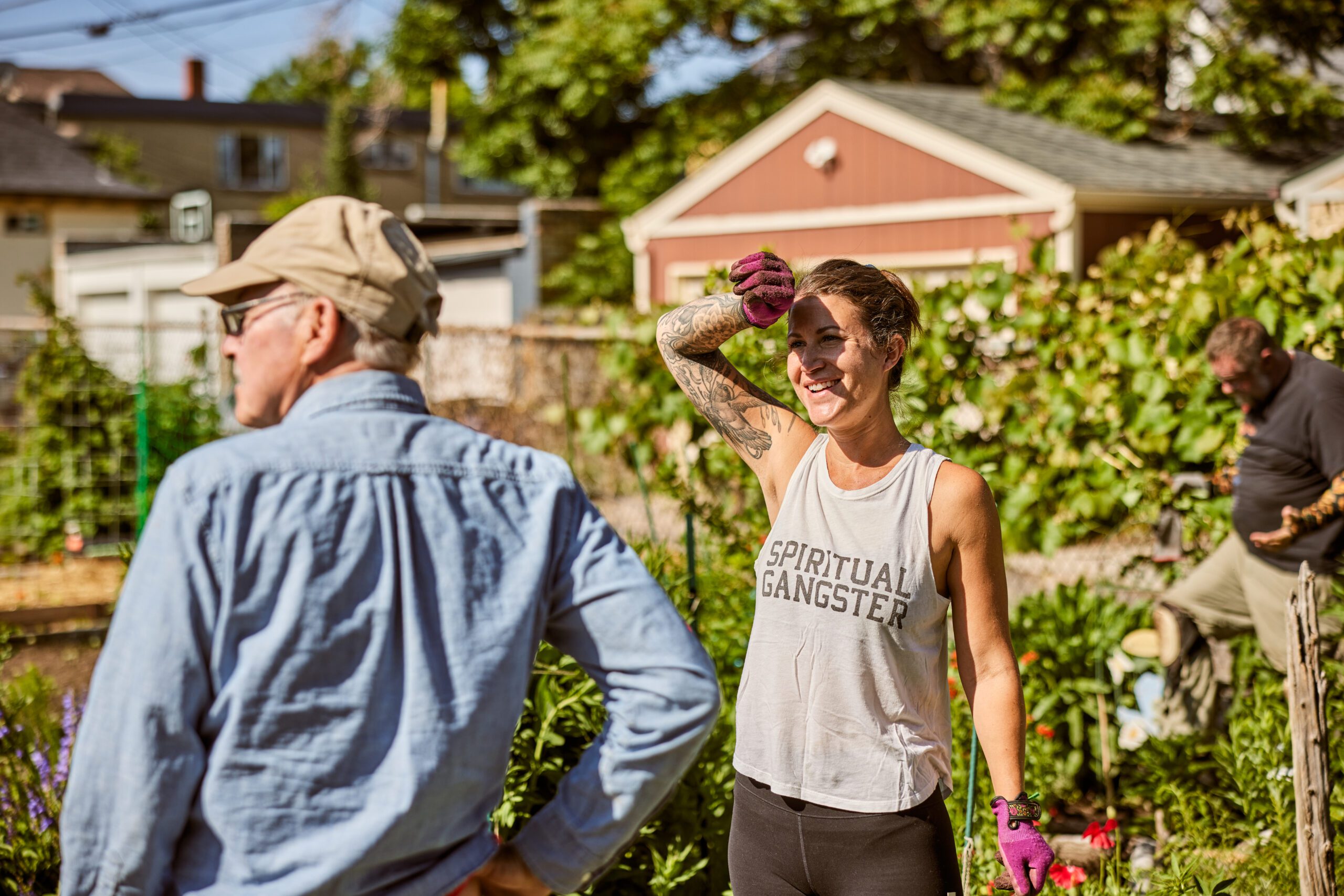
Volunteering is one of the most meaningful ways to support your community.
Whether you’re planting vegetables in a community garden, building raised beds, caring for a food forest, or helping at a neighborhood event, every hour you give helps cultivate healthier people, stronger neighborhoods, and a more resilient local food system.
But what many volunteers don’t realize is that their employer may offer programs that make those volunteer hours even more impactful.
From volunteer grants to paid volunteer time off and group/team volunteer days, workplace volunteer programs allow companies to invest alongside their employees in the communities they care about.
What Are Corporate Volunteer Programs?
Many employers encourage community involvement through workplace volunteer programs.
These initiatives support employees who volunteer while helping nonprofit organizations like DUG expand their impact.
Depending on your employer, you may have access to benefits such as:
- Volunteer Grants
- Volunteer Time Off (VTO)
- Team Volunteer Days
- Skills-Based Volunteering
- Workplace Giving Programs
Together, these programs strengthen communities while giving employees more opportunities to connect with causes they care about.
Volunteer Grants: Turn Your Time into Additional Funding
Some employers offer Volunteer Grants (sometimes called Dollars for Doers) that provide financial donations based on the hours employees volunteer.
That means your time in the garden could also generate funding to help DUG:
- Maintain community gardens and food forests
- Purchase tools, seeds, and supplies
- Expand educational programming
- Increase access to healthy, locally grown food
After completing your volunteer hours, you simply submit a request through your employer, and DUG verifies your service.
It’s one of the easiest ways to multiply the value of your volunteer time.
Volunteer Time Off (VTO): Volunteer While You’re on the Clock
Many companies now offer Volunteer Time Off, allowing employees to volunteer during paid work hours.
Instead of using vacation time, you can spend a workday giving back to your community while continuing to receive your regular paycheck.
Volunteer Time Off is a great opportunity to:
- Join a community garden workday
- Help maintain a food forest
- Support educational events
- Participate in seasonal planting projects
- Volunteer at community celebrations and fundraising events
If your employer offers VTO, consider spending one of your volunteer days with DUG.
Team Volunteer Days: Grow Together
Some of the biggest projects in our gardens happen when teams come together.
Corporate volunteer days allow coworkers to spend time outside the office while making a lasting impact in their community.
Team volunteer projects may include:
- Building raised garden beds
- Installing irrigation systems
- Planting trees and pollinator habitat
- Preparing gardens for spring or winter
- Supporting large community events
Beyond helping DUG, these experiences build stronger teams through collaboration, problem-solving, and shared purpose.
Skills-Based Volunteering
Not every volunteer opportunity involves digging in the soil.
Many professionals choose to volunteer their expertise by sharing specialized skills that strengthen nonprofit organizations.
Depending on your background, you may be able to support DUG through:
- Graphic design
- Photography or videography
- Marketing and communications
- Translation and interpretation
- Technology and IT support
- Event planning
- Professional consulting
Sharing your professional skills can have an impact that lasts long after your volunteer day ends.
Grow More Than a Garden
Every volunteer makes a difference.
Whether you’re spending a Saturday morning in the garden, organizing a team volunteer day, using paid Volunteer Time Off, or submitting a Volunteer Grant request, your generosity helps cultivate healthier neighborhoods throughout Metro Denver.
If you’re ready to get involved, explore DUG’s volunteer opportunities and workplace giving resources to discover how your employer can help your volunteer hours grow even further.
Together, we can cultivate thriving gardens, connected communities, and a more resilient future—one volunteer at a time.
