

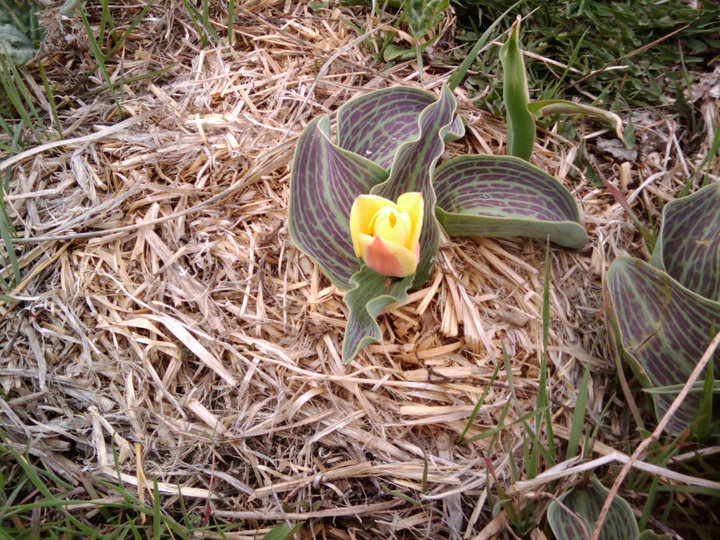
Nothing signals a ‘changing of the seasons’ more than the first emergence of tiny slips of leaves that seem to have an internal clock responding to increasing daylight hours and soil that is ‘slightly less frozen.’ If those leaves belong to bulbs, their cycle continues, and we are rewarded with tulips, crocus, daffodils, hyacinths, alliums (ornamental onions), lilies, and snowdrops, to name but a few—and the amazing array of pollinators supported by those first blooms.
Definition and Types of ‘Storage Units’
Bulbs are plants that have everything they need to complete their life cycle, all encased in an underground storage structure. Those ‘structures’ can look very different, but all store nutrient reserves to ensure the plants’ survival. Their ‘storage structures’ include:
‘True bulbs’ (tulips, daffodils) have five major parts. They all have a flattened bottom (from which the roots grow); fleshy ‘scales’ (the primary storage unit) that may or may not be covered with a tunic (a skin-like covering that protects the scales); the shoot (consisting of the developing flower and leaf buds); and lateral buds that can develop into small offsets of tiny bulbs, usually at the base of the bulb.
‘Corms’ (crocus, autumn crocus, gladiolus) have a swollen stem base that is used for nutrient storage.
The ‘true bulbs’ and ‘corms’ mentioned above are usually listed as perennials in Denver, yet other types of storage units include tuberous roots (dahlias, tuberous begonias) that are either treated as annuals or must be separately lifted and stored over the winter. Their nutrient reserve units are contained in an actual swollen root instead of an enlarged stem.
Planting Specifics
Know their preferences
When:
Plant them in the fall, after the soil has begun to cool—late September to early November. Think of them almost like you would garlic. Many of them come from climates similar to Denver’s, with hot summers, low humidity, and cold winters. Their roots need to begin growing prior to the ground freezing, but they will flower poorly the following spring if planted too early.
Where and How:
Most prefer full sun for optimum floral displays and consistent soil moisture during their fall rooting period. To prepare the planting area, mix in several inches of fully aged compost and a sprinkling of organic-based bulb fertilizer. Plant bulbs with their flat end down, in groups or clumps of 3–5 bulbs at the proper spacing and depth, rather than a single line of bulbs.
In general, adhere to the depth and spacing instructions on bulb packages, since this varies widely according to bulb size. Most tulips and daffodils prefer a depth of 6–8”, spaced 4” apart, while smaller flowers (early-blooming crocus and grape hyacinths) prefer a depth of 3–4”, with only an inch or so between them. Identify all newly planted bulb areas with name tags or stakes so you remember where they are in the spring. Mulch all plantings with shredded fall leaves to lessen problems with bulbs heaving out of the ground during early warming/freeze cycles, reduce erosion, and help maintain soil moisture.
Understand their Needs
Bulbs continue to grow roots during the winter and do best when their planting areas are supplied with sufficient moisture. If there is not adequate snow cover, water all bulbs and newly planted perennials once a month on days when the air temperature is at least 40 degrees. Remember to disconnect the hose after use, or use a watering can.
As spring flowers fade, remove them as they wither to prevent seed formation. The yellowing leaves and stems must remain in place until they fall off naturally (the foliage is helping to feed the underground bulb and allowing it to enlarge and store more nutrients). A larger bulb means more abundant flowers in the years to come. Plan to intersperse annuals such as calendulas and bachelor buttons to disguise the appearance of bulbs entering dormancy, or plant them near shrubs.
Benefits
Bulbs are quiet workhorses, providing early-season nectar and pollen for bees, moths, and butterflies as they search for an important source of energy when few other flowers are in bloom. They are crucial for fruit tree pollination and yields, and increase the general biodiversity of the landscape.
To attract the widest variety of pollinators, try planting simple, single-flowered varieties like crocus (often the first available source of nectar and pollen for native bees and honeybees), dwarf iris, grape hyacinth, and smaller ‘botanical’ or ‘species’ tulips and hyacinths. Once pollinators ‘know’ your landscape as a reliable food source, they are more likely to become season-wide residents, increasing pollination for flowering plants of all kinds, including vegetables.
Bulbs feed our souls, letting us pause, breathe deeply, and explore the magic hidden deep within the cup of the flower—a beacon of resilience; perhaps ‘in flower’ just for a while, but evoking a deeper connection to the rhythms and patterns of our own ‘seasons.’

Graphic by the Netherland Bulb Company

